Furnace Preventative Maintenance
First cold night, furnace won't fire. Sound familiar?
Furnace preventative maintenance is the yearly check-up that heads that scene off. A pro cleans, tests and adjusts the parts that wear while you look after the basics in between. Some people call it preventive maintenance, and some just say yearly care. It's all the same routine.
Already past that point, with a furnace that won't fire right now? Skip ahead to 24/7 furnace repair, where a local pro can be on the way any hour of the night.
How often should it happen?
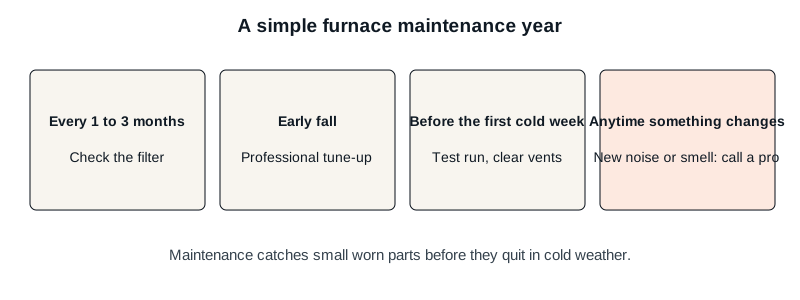
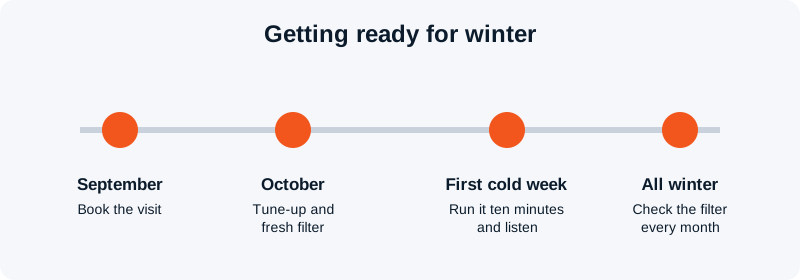
Once a year. Early fall is the sweet spot, before the heating season starts, and booking in September or October also beats the winter rush, when demand fills every shop's calendar. Furnaces past ten years old deserve a closer look, and so does one that's started short cycling or making noises it never made before. An annual furnace tune-up is the baseline, and anything unusual moves the date up. A furnace that's had regular furnace maintenance tends to face the winter the way it ended the last one.
| When | What to do |
|---|---|
| Every 1 to 3 months | Check and replace the filter |
| Start of heating season | Test run, clear vents and registers, new thermostat batteries |
| Once a year | Professional visit and safety inspection |
| Any time something changes | New noise, smell or cold rooms mean it's time for a pro |
Why furnace maintenance matters
A heating system has a lot of moving and heating parts, and most of them wear slowly. Dust builds up on the burners, soot coats the sensor, a blower bearing gets noisy, a capacitor weakens. None of that announces itself until the first hard cold snap, when the furnace runs for hours and the weak part finally gives out.
Efficiency and lifespan
Furnace maintenance does three things, and none of them is glamorous. It holds airflow clear so the furnace runs the way it was built to, which helps efficiency and holds energy bills in check. It catches worn parts ahead of failure, so the system lasts longer and doesn't have to work harder than it should. And it puts a trained set of eyes on the safety controls.
Regular maintenance helps the whole system run properly. A dirty burner or a clogged filter forces the system to run longer to warm your home, which wastes fuel and shortens the life of the equipment. Annual maintenance also helps prevent small issues from turning into bigger problems, and it gives an HVAC technician a chance to inspect parts you'd never see.
The heat exchanger
A gas appliance has a flame, a vent and a heat exchanger to look after. A damaged heat exchanger or a blocked vent can send exhaust, carbon monoxide among it, where it shouldn't go, so this part matters. Energy Star publishes a heating and cooling maintenance checklist if you want a second source for the basics.
What a tune-up covers
It's a set routine, not a quick glance. The tech starts the furnace and watches the whole sequence, from inducer fan to igniter to flame to airflow, then explains what they found in plain words. Think of it as a checklist the tech works through in the same order each time, so your heating system keeps running smoothly.
A thorough HVAC service visit also looks at how the whole system works together: the thermostat, the wiring, the fan and the ductwork. Cleaning the burners and the fan improves airflow, and a clean system uses less energy. The best visits end with a plain explanation of what was done and what's wearing out, so the operation of your equipment holds no surprises.
Cleaning and testing
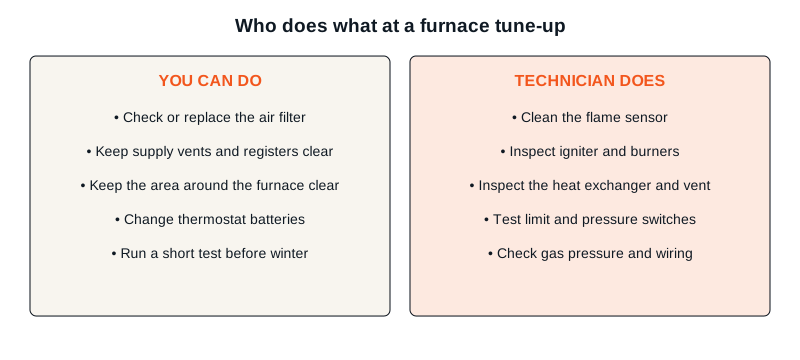
The air filter gets cleaned or swapped, and the sensor gets wiped, since soot on it causes plenty of shutoffs. The igniter and burners get checked for cracks or buildup that would keep the flame from lighting properly. Then the tech looks at the blower motor, the belt if there is one, the capacitor, the thermostat settings and the electrical connections. On a high-efficiency furnace the condensate drain gets checked too, since a clogged line can shut the furnace down.
Safety checks
The heat exchanger gets inspected for damage, and the vent pipe for blockage or rust. The tech tests the limit switch, the pressure switch and the other safety controls, then confirms the fuel pressure is where the manufacturer wants it. This is the part you can't do yourself, and it's the reason a visit is worth booking even when the furnace seems fine.
Does the fuel type matter?
The routine differs a little by fuel. A gas furnace needs the burners, the sensor and the fuel pressure checked, an oil system needs the nozzle and the combustion tuned, and an electric one needs its heating elements and connections tested. Whatever your fuel, the heating systems in your home benefit from the same yearly visit, and HVAC technicians who work on all three can tell you what your equipment needs to stay efficient.
What you can do between visits
Some of it's homeowner work, and the filter is pretty much the whole game, since a clog is the most common reason a furnace overheats and shuts off. Check yours every month or two all winter and don't wait for it to look filthy. Small habits help keep the system running through the cold months, and they give the pro less to fix when the visit finally happens.
- Swap the filter every one to three months, and more often if pets live in the house
- Leave vents clear, with registers and return grilles open
- Store flammables well away from the furnace and the flue
- Fresh thermostat batteries annually, and a look at the settings before winter
- Run it for ten minutes ahead of the first cold week, and pay attention while it does
Listen while it runs. Does it smell, sound or feel different from last winter? Anything inside the cabinet, meaning the gas valve, the burners and the sensor, belongs to a pro. A pilot that keeps going out is a pro's call too.
Clean air supports safe operation, so clear dust and clutter from around the equipment and let the air move freely. If anything looks damaged or dirty inside, don't reach in. A good habit helps, but it never replaces a proper inspection.
Signs a visit is due
You don't have to wait for the calendar. A few things say the furnace needs attention now.
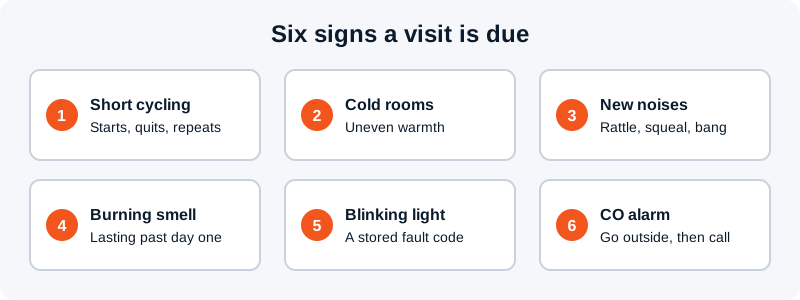
- Short cycling: the furnace shuts itself off soon after it starts and repeats the pattern
- Cold rooms while others stay warm, which can mean a ductwork or airflow issue
- A new rattle, squeal or bang when it starts
- A burning smell that doesn't fade after the first few minutes of the winter
- A blinking light on the control board, which is how many furnaces show an error code
- A CO alarm sounding: get everyone outside first, then call 911 or the gas utility
Several signs at once suggest a larger issue, so don't wait for the system to fail. Prompt service can prevent a costly breakdown, and an experienced pro can often find the cause quickly.
Does it really stop breakdowns?
Maintenance lowers the odds, and that's the honest answer. Many winter failures begin as small worn parts like a sooty flame sensor, a tired capacitor or a cracked igniter, and a tune-up catches those before they quit on you at two in the morning, while clear airflow spares everything else the strain all winter. No guarantees.
It doesn't make a furnace immune. An older unit can still pick the coldest night to die, and when it does, our post on my furnace is blowing cold air explains what the symptoms usually mean, including the sensor trouble a tune-up is built to catch.
What a visit costs
Prices vary by region, by company and by what your furnace needs, so this page doesn't quote any. Ask for the quote in writing, ensure it lists what the visit includes, and compare it with what furnace repairs cost on the coldest night.
Annual maintenance plans
Many companies sell a maintenance plan that bundles a yearly visit with priority scheduling and discounts on repairs. It can be worth it if you'd otherwise forget, but read what the plan covers and ask who does the work. A good HVAC company explains it plainly, and your HVAC system gets the same attention whether or not you buy a plan. Ensure you know who answers the phone when it fails.
Booking one
To schedule a visit, phone (833) 749-5188 and give the dispatcher your furnace's rough age and anything odd it's been doing lately, because that's what helps them send someone who knows what to bring. A verified local pro inspects it and quotes whatever needs fixing. Direct HVAC Pros only makes the referral, which is free for you, and the line's open nights and weekends in case the furnace picks its own moment. The dispatch team works with independent local HVAC companies, so one call can help with maintenance, repair work or a second opinion on an aging system. Mention the heating and cooling equipment in your home so the right pro is matched to it.
Getting more out of a visit
A little preparation helps. Clear a path to the furnace so the pro can reach the cabinet, and write down what the furnace has been doing, such as new noises or rooms that run cold. During the visit, ask what was cleaned, tested or adjusted, and write it down. Over a few winters that record shows you what's normal for your furnace.
Tune-up time? Call in.
Give the dispatcher your furnace's age and any new noises you've noticed.