24/7 Furnace Repair
The furnace dies at 2 a.m., the house loses a degree every few minutes, and the shop that installed it will not open until Monday.
Ring (833) 749-5188 and a dispatcher connects you with a verified local pro, whatever the hour or the weather.
Online nowA dispatcher answers nights, weekends and holidays.
Emergency heating repairs, nights and weekends
Heating systems do not keep office hours. They quit on holiday weekends, in the middle of a freezing snap, and right after the supply houses close, which is why same-day service has to begin with a real person answering the phone. When you call (833) 749-5188, a dispatcher listens to what the heater is doing and connects you with a verified local HVAC pro who quotes the job and does the repair. If the blower runs but the air is cool, start with why a heating system blows cool air.
Direct HVAC Pros is a nationwide referral service, not a contractor. Our dispatch team looks at where your home is and what the heater is doing, then pairs you with the best verified pro available in your area. The pro sets the price and performs the repair, so the number you are dialing is a fast route to the right technicians for emergency HVAC service calls and nothing more. The referral is a free service, so there is no cost to request service.
Calling early matters. A heating system that is short cycling, locking out or blowing weak air is usually reporting one failed part, and the sooner a technician looks at it the sooner that part gets replaced. Emergency heating service is one phone call away at any hour, and the dispatcher explains what happens next before you hang up. Call now and you can often get service today.
How gas, oil and electric units each fail
The fuel decides what usually goes wrong, so the dispatcher asks about it first. The HVAC professionals we connect you with handle repair jobs on all three fuel types across the common brands and both older and newer systems, plus the cooling equipment that shares the same ducts, and they know the difference between a no-heat call on a gas unit and one on an oil burner. Not sure which fuel your home uses? Look for these clues:
- Gas or propane: a gas pipe with a shutoff valve and a vent to the roof or an outside wall
- Oil: an oil tank in the basement or yard and a fuel line to the burner
- Electric: thick electrical cable and no gas pipe or flue
Gas and propane units
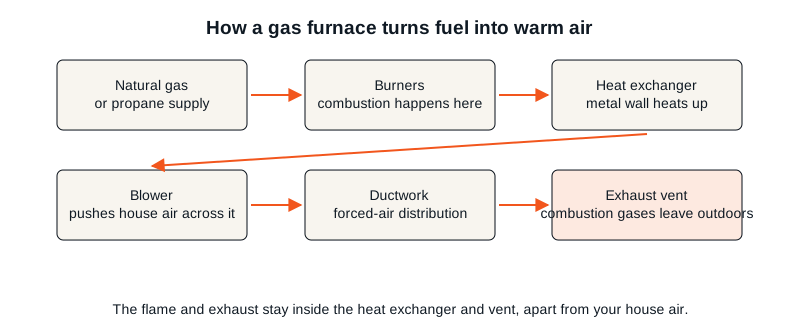
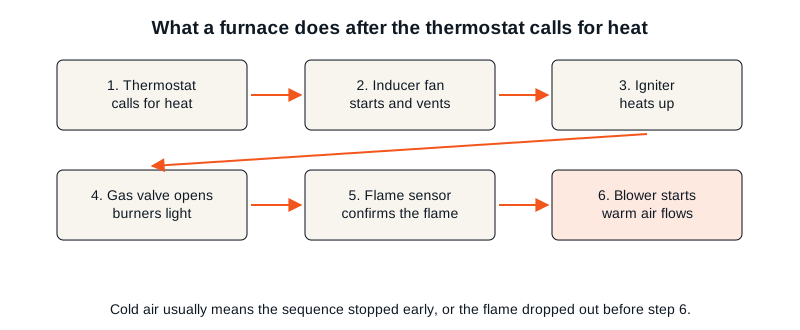
Most no-heat calls on a gas unit come down to ignition. The igniter cracks or weakens, the flame sensor gets coated with soot and cannot prove a flame, or the gas valve does not open when the control board asks it to. You hear clicking, a short burst of flame or nothing at all, and the unit shuts itself down. Repair here usually means cleaning or replacing the sensor, swapping a hot surface igniter, or testing the valve and the safety switches in front of it. Older models with a standing pilot add a thermocouple to that list.
Common gas heating issues
Ignition issues
A weak igniter or a missed spark stops the burners before they light.
Sensor and valve issues
A sooty sensor or a sticky gas valve shuts the gas off in the middle of a cycle.
Venting and airflow issues
A blocked flue or a clogged filter trips the safety switches and ends the cycle early.
Oil units
An oil unit that quits is usually waiting on fuel or spark: a clogged nozzle or filter, a weak ignition transformer, a failed cad cell, or a pump that lost its prime. The burner runs briefly and then locks out on its red reset button. Pressing that button over and over can flood the combustion chamber, so this is a job for a technician.
Electric units
An electric system has no flame to lose. When one stops heating, the cause is usually a burned-out heating element, a failed sequencer or relay, a tripped limit, or a breaker that keeps tripping because something is pulling too much current. Electric repair is mostly electrical diagnosis with a meter, which is a job for a pro and not a guessing game.
Ignition lockouts, flame sensors and control board codes
Modern forced-air systems protect themselves. If the igniter fails, the flame drops out, the pressure switch does not close or the limit switch senses too much heat, the control board shuts the burners down and often stays in a lockout. A blinking light behind the blower door is the board's way of naming the fault.
If you can see that light, count the flashes and have the pattern ready when you call. It helps the dispatcher describe the job and helps HVAC technicians arrive with the right part. These are the usual suspects behind a lockout:
- Flame sensor: a thin rod that gets dirty and stops reading the flame
- Hot surface igniter: glows to light the gas and cracks with age
- Pressure switch: confirms the inducer motor is venting the exhaust
- Inducer motor: pulls exhaust through the heat exchanger and wears out
- Limit switch: shuts the burners down when the unit overheats
- Control board: the brain, a less common but real failure
Clearing a lockout without finding the cause only hides the problem until the next freezing night. Real repair, not just routine maintenance, means the technician finds the failed part, replaces it and runs the system through a full heating cycle before leaving.
No heat, short cycling and weak airflow from the heating system
Not every call is a dramatic breakdown. Plenty of repair visits start with a home that never quite warms up, a unit that cycles on and off every few minutes, or vents that barely move air. Each symptom has a short list of causes, and HVAC technicians go through that list in order.
- No heat at all: thermostat settings or wiring, a tripped limit switch, a failed igniter or a dead control board
- Short cycling: a clogged filter, restricted vents or an overheating limit switch shutting the burners off
- Weak airflow: a dirty filter, a failing blower motor or a collapsed duct
- Cool air from the vents: burners that will not stay lit, usually the flame sensor or the gas valve
- Banging, squealing or rattling: delayed ignition, a worn blower bearing or a loose panel
Same-day service depends on who is on duty in your area, and the dispatcher can tell you how the schedule looks. Routine HVAC maintenance before the weather turns, with a fresh filter, a cleaned sensor and a check of the blower, heads off most of the issues above and keeps the cooling side in shape too.
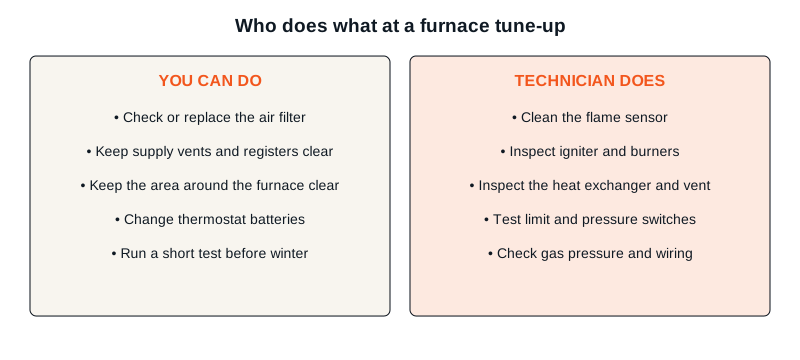
Regular heating maintenance is the simplest protection for your home. A maintenance visit in the fall lets a technician clean the burners, test the safety controls and flag worn parts, and a maintenance plan with a local pro often includes priority scheduling when the weather turns.
Dial (833) 749-5188, say what the unit is doing, and ask for an arrival window before you put the phone down.
Water leaks, frozen plumbing and keeping the home livable
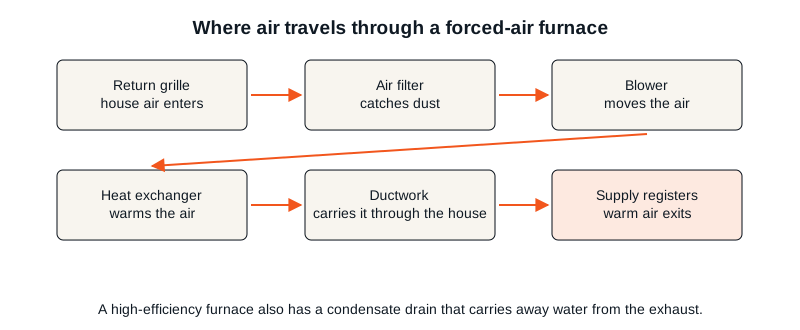
Some heating issues come with water. High-efficiency units squeeze so much heat out of the exhaust that the gases turn into water, called condensate, which leaves through a small drain line. When that line clogs, backs up or freezes, a safety switch shuts the heater down and water can pool around the base. Treat water near the equipment as a reason to switch the unit off and call for repair, and do not pour chemicals into the line. Water leaking from the base of a heater points to a clogged drain or a failed part, or sometimes to nearby plumbing, so mention any water on the call.
Winter outages also put plumbing at risk. When the house drops toward freezing, water pipes on outside walls can freeze, and a burst pipe is a bigger problem than a broken heater. While you wait for the technician, the goal is to protect the people, the home and the plumbing until the system is running again.
- Close the doors to rooms you are not using so the warmth stays where you are
- Open the cabinet doors under sinks on outside walls so home air reaches the water pipes
- Let a faucet drip slowly overnight when it is freezing outside so water keeps moving through the plumbing
- Check exposed plumbing in the basement and crawl space for frost, and wrap it if you can
- Put on layers and pull out blankets before reaching for any heater
- Plug an electric space heater straight into the wall, keep it three feet from anything that burns and switch it off when you leave the room
- Never heat the home with a gas oven, a grill or a camp stove
If a pipe does freeze or burst, shut off the water at the main valve and call a licensed plumber. A heating pro handles the heater, and a plumber handles the plumbing.
What repairs cost, and when replacement makes sense
The price depends on what failed, and the pro sets it. Direct HVAC Pros does not quote or charge for the repair. A sensor cleaning or an igniter sits at the smaller end of the range, a blower motor, inducer motor or control board costs more, and a cracked heat exchanger often means replacement instead of repair.
After-hours service can carry a different rate than a weekday visit, so ask about overnight or holiday charges, installation quotes and any diagnostic fee on the first call. Ask whether the service call fee is credited toward the repair, ask for the quote before work begins, and ask for warranty terms in writing.
A repair visit is also a good time to ask what condition the rest of the equipment is in. A yearly maintenance visit before the heating season is the cheapest repair there is, because it catches many of the failures described above. The pros we connect you with offer heating and cooling services, so one call covers a heating system today and a cooling system in July. They also quote installation of new heating and cooling systems, and installation, maintenance and replacement are all HVAC services you can ask about in the same visit. A unit that is past economical repair does not mean starting over with a new search.
What happens after you call
You phone (833) 749-5188 and the dispatcher asks what the heater is doing, which fuel it burns and where you are. Our matching system then picks a verified local pro for the job and connects you directly. The pro confirms an arrival window, which depends on who is on duty in your area that hour, then diagnoses the problem and quotes the repair.
From there it is between you and the technician. Many repairs finish on the first visit when the failed part is a common one, and when a part has to be ordered the pro says so and schedules the return. If the equipment is old and the repair is large, you can ask about replacement in the same conversation.
Heating questions answered
Why does my furnace click but never light?
Clicking with no flame usually means the igniter is not heating or the flame sensor cannot confirm a flame, so the control board shuts the gas off. Both are common repairs, and both take a technician with the right parts. Dial (833) 749-5188 and describe the clicking, how many times the unit tries, and whether the inducer fan starts first.
My furnace is blinking an error code. Should I wait or call?
Call. A blinking code means the control board found a fault and locked something out, which is exactly what repairs are for. Count the flashes, which the label inside the blower door explains in general terms, and give the pattern to the dispatcher. The code narrows the issue to the flame sensor, the pressure switch, the limit switch or the ignition system, so the pro can arrive prepared.
What does a flame sensor do, and can a dirty one cause a no-heat call?
The flame sensor is a thin metal rod in the burner flame that tells the control board the gas is burning. When soot builds up on it, the board cannot prove a flame and closes the gas valve a few seconds after ignition. That produces the classic heater that lights, runs briefly and quits. A technician cleans or replaces the sensor, which is among the quicker repairs.
What is a heat exchanger, and can a cracked one be repaired?
The heat exchanger is the metal chamber that warms the air while keeping the burner flame and exhaust inside the unit and vent. When it cracks or corrodes, the usual answer is replacement, because a damaged exchanger is not a part a pro will patch and leave running. Soot, a yellow flame and a burning smell are all reasons to call, and the technician will tell you honestly when repair stops making sense.
What does a pressure switch fault mean?
The pressure switch confirms that the inducer motor is pulling exhaust out before the burners light. If the switch never closes, the heater will not fire. The cause may be the switch itself, the inducer motor, a blocked vent or a drain problem, and a technician checks them in order. It is a safety lockout, so the heater stays off until the cause is fixed.
Heat out tonight? Make the call.
We work around-the-clock. Describe the symptoms and the matching system finds the pro. The line is staffed at every hour.