Emergency Heat Pump Repair: 24/7 Repairs Through One Call
Heat pump blowing cold air, frozen over or completely silent? Call (833) 749-5188. The line is open 24/7, and a dispatcher matches your home with a verified local pro for emergency heat pump repair. The referral is free, and the pro quotes the job before any work starts.
Online nowCalls are answered after dark, on weekends and on holidays.
Emergency heat pump service when it quits after hours
A heat pump moves heat instead of using fuel, so repairing one is a different skill from furnace work. The HVAC pros we connect you with handle dual-fuel and ductless systems, and they know the emergency calls that every winter brings.
Here is how the call works. The dispatch team takes down the symptoms and connects you with a verified local pro. The pro's technicians diagnose the problem, quote the heat pump repair and do the work. Direct HVAC Pros does not send its own trucks, and a free phone call is all it takes to start.
Emergency heat pump service covers the whole heating and cooling system: the equipment outside, the unit inside and the lines between them. Temperatures can drop fast in a home with no warmth, so a quick call matters, and the dispatcher can explain what to do while you wait. These services run around the clock. If the vents are only lukewarm, see why a heat pump heater blows cold air.
Emergency heat pump signs that cannot wait
Some heat pump problems cannot wait for morning, especially in winter. Treat any of these as an emergency and call right away:
 No heat in freezing temperatures, especially with children, older adults or pets at home
 Burning smell, smoke or sparks: switch the system off first
 A breaker that trips again after a reset
 Hissing or oily residue at the line set, a sign of refrigerant leaks
 Grinding, banging or squealing noises
 A frozen unit that will not clear
Emergency failures are rarely a single event. A heat pump that fails at night often shows warning signs for days: longer run times, weaker warmth or a new noise. Catching a developing failure early lets the pro plan the repair instead of reacting to a breakdown.
Heat pump blowing cold air in heating mode
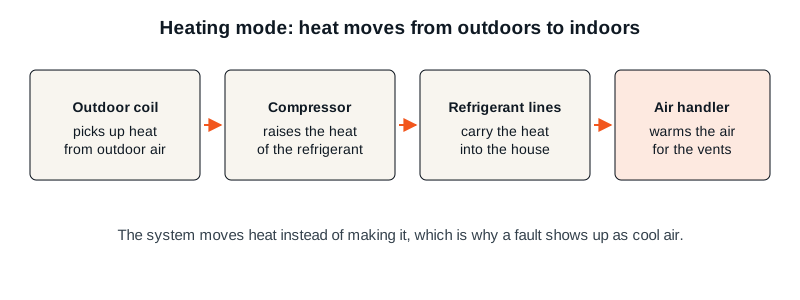
A few minutes of weak warmth during a defrost period is normal. A steady stream of unheated air with the thermostat on Heat is not. The usual causes are a low charge, a reversing valve stuck in cooling mode or a failing compressor.
A frozen heat pump that will not clear
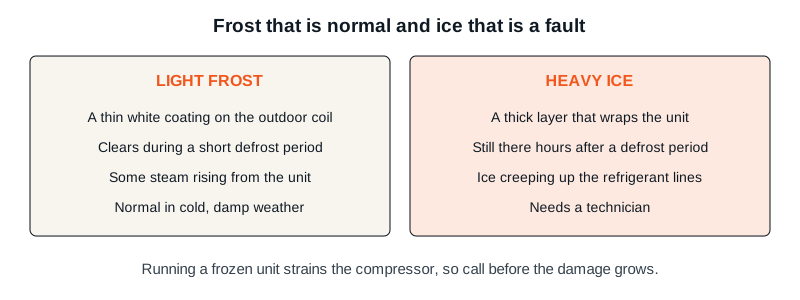
Light frost is expected in damp conditions. A thick layer of ice that stays after a defrost period is a fault, usually a failed control board or sensor, a low charge or restricted airflow. Running a frozen heat pump strains the compressor, so call before the damage grows.
Burning smell, sparks or a breaker that keeps tripping
This is an electrical safety issue. Switch the system off at the thermostat and the panel, then call. Do not reset a tripped breaker again and again, because each reset can add to the damage.
Grinding, banging or squealing from the cabinet
Sounds like these point to worn motor bearings, a loose part or a failing compressor. Turn the system off and call.
Heat pump repair for electrical and refrigerant failures
Most heat pump repair calls come down to electrical parts, the refrigerant circuit or the controls. A clear description of what you see and hear saves time, and this table shows where each symptom usually starts.
| What you notice | Where the fault usually sits | What the pro works on |
|---|---|---|
| Outdoor fan not spinning while the blower inside runs | Outdoor section | Run components, contactor or motor |
| Compressor hums but does not start | Outdoor section | Start components or the compressor |
| Heavy ice that will not clear | Outdoor section | Defrost board and sensor, refrigerant charge |
| Cold air from the vents on a heating call | Refrigerant circuit | Reversing valve, refrigerant leak, compressor |
| Weak airflow, rooms barely warm | Indoor side | Blower, filter, coil, ductwork |
| Water around the air handler | Indoor side | Condensate drain or a frozen evaporator |
| Nothing runs at all | Either side | Breaker, wiring, thermostat or control board |
Electrical failure and refrigerant failure look alike from the couch: in both cases the system runs but does not heat the home. That is why heat pump repairs start with measurements, not guesses, and why repairs that are described clearly on the call are easier to plan.
Electrical repair: capacitor, contactor and fan motor
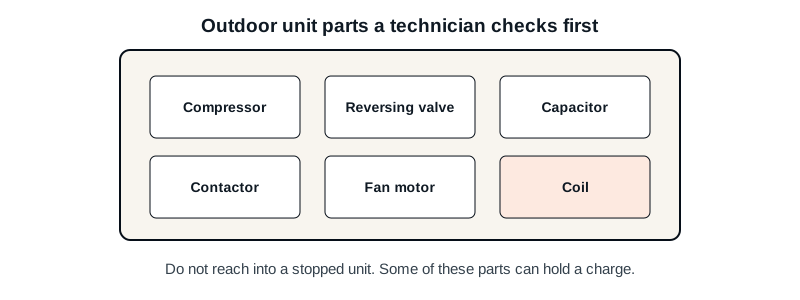
Start and run components, the contactor and the wiring are the most common electrical failures. Do not touch a stopped outdoor unit, because parts inside can hold a charge.
Refrigerant leaks and a struggling compressor
Refrigerant leaks leave the system without enough charge to carry heat, so it runs and runs and never warms the house. A leak search, a repair and a recharge to the maker's spec are work for a trained technician. A failed compressor is the large-end repair on most systems. Many heat pump repair visits end with a single part, but a leak or a failed compressor can turn a repair into a replacement question.
Reversing valve and defrost control faults
A reversing valve stuck in cooling mode blows no warmth through the vents on a heating call. A bad defrost board or sensor is the other common cause of weak heat, along with a clogged filter and blocked ductwork.
How the HVAC diagnostic visit works
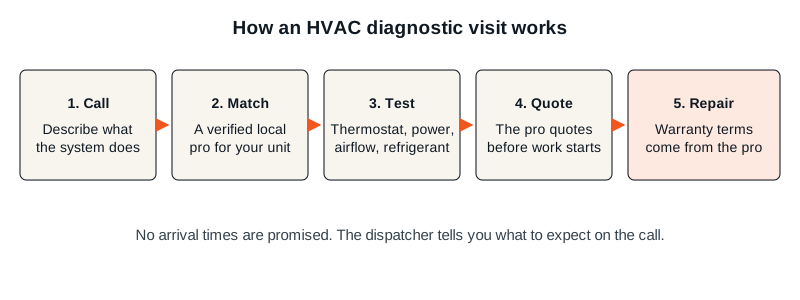
A diagnostic visit follows the same order every time, so you get a clear finding before any part is replaced:
- Call (833) 749-5188 and describe what the system is doing.
- The dispatch team matches you with a verified local pro for your equipment.
- The pro's technician tests the thermostat, the airflow, the electrical parts and the refrigerant circuit.
- The pro quotes before work starts, and you approve or decline.
- The repair, plus any warranty terms, comes from the pro.
No arrival times are promised, and the dispatcher explains what to expect on the call. Technicians who handle emergency repairs follow this order for every system, whether the failure is electrical or mechanical.
Emergency heat and backup heating while you wait
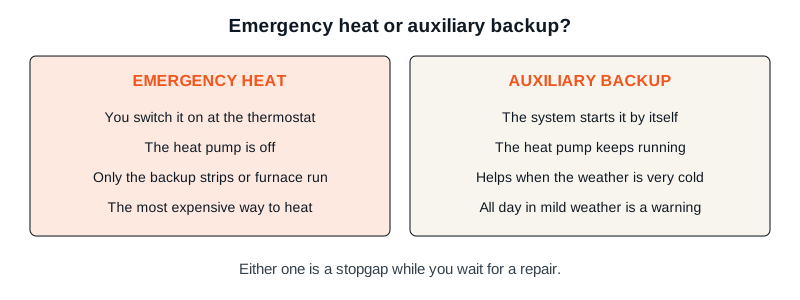
Most thermostats have an emergency heat setting, labelled Emergency Heat or Em Heat. It switches the heat pump off and runs only the backup: heat strips, or the gas furnace in a dual-fuel home. It keeps the house comfortable, but it costs more in energy, so it is a stopgap and not a place to stay for days.
Dual-fuel systems pair a heat pump with gas backup and switch between them by the temperature outside. When one half quits, the other can carry the house and hide the failure until the bill arrives, so tell the dispatcher which half is down.
Emergency heat or the auxiliary backup?
The emergency setting is manual. Auxiliary backup, shown as Aux or Aux Heat on many displays, starts by itself when the heat pump falls behind. Backup that runs all day during a mild spell is a warning sign.
Staying safe until the pro gets there
- Turn the system off at the panel and the controls if you notice burning smells or sparks
- Switch the thermostat to Emergency Heat if the heat pump is frozen or noisy
- Keep the cabinet outside clear of snow and leaves
- Never heat the home with an oven or grill
- Use space heaters only as the maker directs
Heat pump repair or replacement?
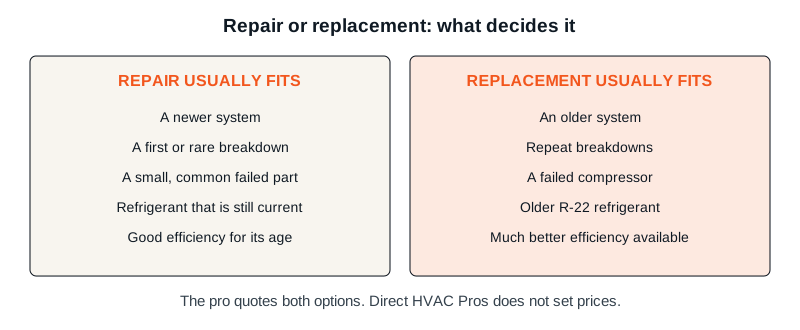
Heat pump repair or replacement comes down to a few honest factors: the age of the system, how often it has failed, whether the compressor is the failed part, and whether the unit still uses older R-22 refrigerant, which is being phased out in the U.S. Newer heat pumps also use less energy, so efficiency can tip the choice.
Replacement starts to make sense when repairs keep piling up, the compressor has failed or the system is old. A replacement can also cut energy use, and the pro quotes both options so you can compare the cost of a repair against a new heating and cooling system. A heat pump repair that costs close to the price of a new unit is usually a signal to compare both options. Direct HVAC Pros does not set prices.
Heat pump maintenance and installation services
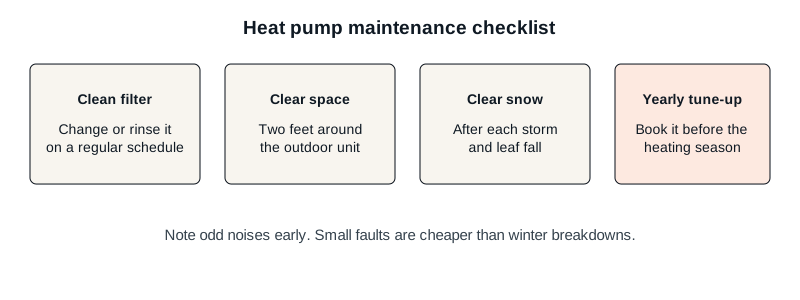
A fall tune-up catches weak parts and slow leaks before the first freeze. Maintenance also covers filters and clear space outside, which keep the system working all winter.
The same pros handle installation of a new system and replacement of an old one, so one call covers maintenance, new equipment and repairs. These HVAC services are quoted by the pro, who also explains efficiency options and warranty terms. Many breakdowns trace back to skipped maintenance, so a maintenance visit before the freeze is the cheapest way to avoid an emergency call. HVAC technicians who handle installation also handle heat pump repairs, and the pro's technicians explain which services are included.
- Change or clean the filter
- Keep two feet clear around the unit outside
- Clear snow after storms
- Book a yearly pro tune-up before the heating season
- Note odd noises early
What heat pump repair costs, and who sets the price
Cost follows the failed part, and the pro sets the price, not Direct HVAC Pros. Start parts and contactors sit at the small end, motors in the middle, and leaks, reversing valves and compressors at the large end. The cost of a repair also depends on the time of day, so ask about after-hours rates.
Get the quote in writing or by text, and remember that warranty terms come from the pro. A good repair is stated clearly before work begins, and a fall tune-up is the cheapest repair there is.
Heat pump frequently asked questions
What is the defrost cycle, and when does frost mean a problem?
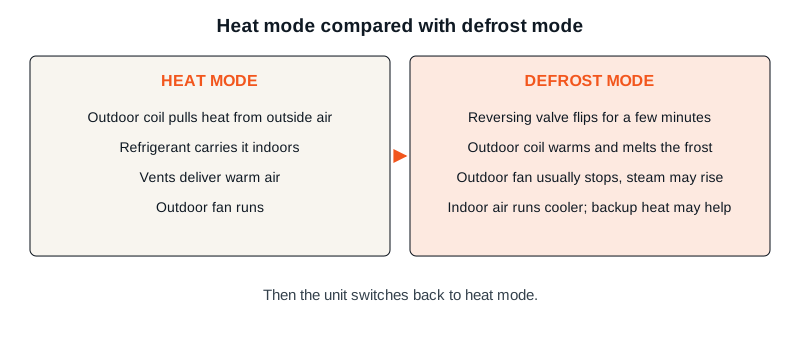
In damp, freezing weather a heat pump briefly runs in reverse to melt frost off its outdoor coil, so a little steam and a few minutes of chilly air are normal. A thick layer that stays put, or a defrost period that never seems to end, points to a failed control board, a bad sensor or low refrigerant. That is the moment to call (833) 749-5188.
How long can I leave the thermostat on emergency heat?
Long enough to keep the home warm until a technician has looked at the system, which usually means hours rather than days. The emergency heat setting runs only the backup heat strips or the furnace, so the energy cost climbs quickly, and it does nothing to fix the heat pump itself.
What does a reversing valve do, and what happens when it sticks?
It switches the direction refrigerant flows, so the same equipment can heat the house in winter and cool it in summer. When the valve sticks in cooling mode, cold air comes through the vents on a heating call. Replacing one means recovering and recharging refrigerant, so it is a job for a technician.
Why is the outdoor fan not spinning while the air handler runs?
The usual suspects are a failed capacitor, a worn contactor or a burned-out fan motor. Do not reach into a stopped outdoor unit, because that part can hold a dangerous charge even with the power off. Tell the dispatcher what you hear from outside so the pro knows which parts to check first.
Is it normal for the auxiliary backup to run all the time?
Short stretches in very cold weather are expected, because the backup helps when the heat pump falls behind. Backup heat that runs all day in mild weather, or a sudden jump in the electric bill, suggests the heat pump is not carrying its share and needs a repair visit.
Emergency HVAC services through one national dispatch line
Direct HVAC Pros runs one number for any U.S. address. A dispatcher answers at any hour, the referral is free, and you are matched by equipment type to a verified local pro. The pro's technicians do the work and set the price, so emergency calls, heating and cooling repairs and after-hours failures all start with the same call. The dispatch team handles heat pumps, furnaces and ductless systems alike, and the pro's technicians explain the repair before any work begins.
Emergency heat pump down? Call (833) 749-5188
Tell the dispatcher what the system is doing and a verified local pro takes it from there. Free referral, open 24/7.