Central Heating Repair and Maintenance
When the system that warms your whole home stops, one call gets a verified local pro on the way, day or night. Whether the source is a furnace, a boiler or a heat pump, the fix starts with an HVAC technician who can diagnose it.
Direct HVAC Pros is a free referral service and does not do the repair itself. You phone (833) 749-5188, describe what the system is doing, and the dispatcher connects you with a pro who works on your kind of equipment. That pro quotes the repair and does the work.
Online nowFree assessment on the call. Open nights, weekends and holidays.
How central heating works
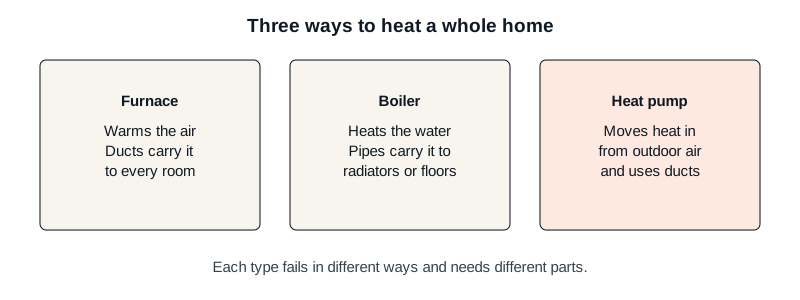
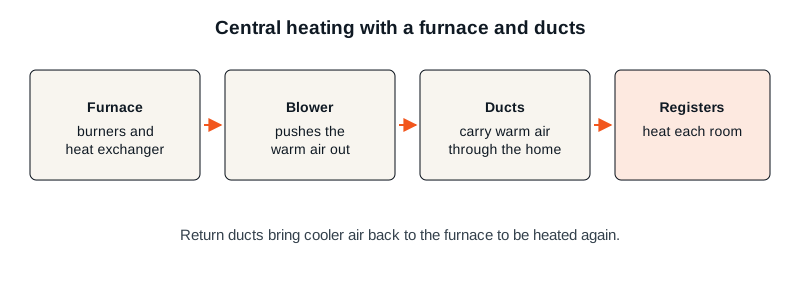
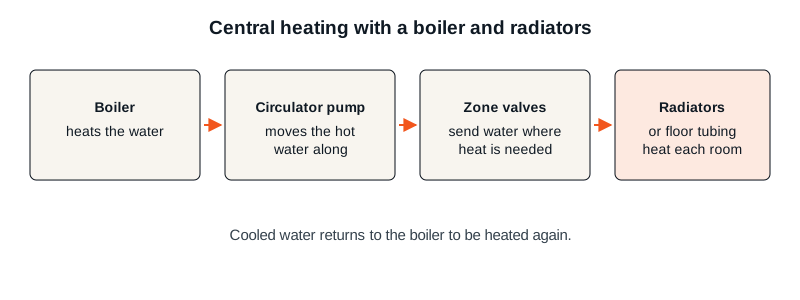
Central heating makes warmth in one place and sends it to every room. In a ducted home a furnace or heat pump warms air and a blower pushes it through the ducts. In a home with radiators a boiler heats water and a circulator pump sends it through the plumbing to radiators or tubing under the floor.
When that one source fails, comfort drops in every room together. The fuel matters as well. A gas furnace, an oil boiler and an electric heat pump fail in different ways and need different parts, so a good heating repair starts with a few questions about your equipment.
Not sure which fuel your system uses? Our guide, does central heating use gas or electricity, shows how to check in a couple of minutes.
Ductless mini-splits are a different setup. They warm one room at a time without ducts, and a ductless mini-split needs a technician who works on that equipment. Ductless systems have their own indoor units and refrigerant lines, so ductless repair is a separate skill.
Signs you need a repair
Watch for these signs of trouble with your heating system:
- No warmth: the thermostat calls for warmth and nothing starts, or the blower runs and the air stays cool
- Short cycling: the system starts, runs a few minutes and shuts off again, then repeats
- Uneven warmth: some rooms stay cold while others are fine, or airflow from the vents is weak
- Noises: banging, squealing or rattling when the system starts up
- Smells: a burning or musty smell from the vents or the equipment
- Water trouble: a boiler pressure reading that keeps dropping, or puddles around the base
- A blinking light or error code on the control board
- Heating bills that climbed with no change in how you use the house
Any one of these issues is worth a call. If several show up at once, call right away, because a failing part can put extra strain on the rest of the equipment.
Noises, smells and uneven warmth rarely fix themselves. A technician can usually trace each one to a short list of causes, which is why describing the symptom on the call helps.
If you see one of these signs, book a repair before the weather turns, because a small repair costs less than an emergency repair on the coldest night.
Safety comes first. If you smell gas, leave the home, then call the gas company or 911 from outside before you call for a repair.
Types of systems and what usually fails
Each HVAC system type fails in its own way. This table shows how each one moves warmth and where problems tend to start.
| System | How warmth travels | Common failures |
|---|---|---|
| Gas or oil furnace | Warm air through ducts | Igniter, flame sensor, blower motor, limit switch |
| Electric furnace | Warm air through ducts | Heating elements, sequencers, breakers |
| Boiler | Hot water to radiators or floor tubing | Circulator pump, low pressure, leaking valves |
| Heat pump with air handler | Warm air through ducts | Reversing valve, capacitor, defrost board, backup strips |
Gas, oil and electric furnaces
Gas and oil furnaces usually fail at ignition or air delivery: a worn igniter, a dirty flame sensor, a failing blower motor or a limit switch that keeps shutting the burners off. A unit with a standing pilot light adds a thermocouple to that list, and a pilot light that will not stay lit is a job for HVAC technicians.
Electric furnaces fail at the heating elements, the sequencers and the breakers, so the repair there is mostly electrical diagnosis. Heater repair on an electric unit usually means a failed element, relay or breaker.
Furnace repair is often a one-part fix once the cause is found. Whether you call it furnace repair or heater repair, the work is the same: find the failed part and replace it.
Boiler repair
A boiler heats water and sends it through the plumbing to radiators or floor tubing, so boiler repair usually starts with the loop: low pressure, leaks, air in the lines or a circulator that has stopped moving it.
The usual causes are a failed circulator pump, a leaking valve, a zone valve that sticks or a faulty control. Good boiler repair means checking the plumbing, the pump and the controls together, because a problem in one often shows up in another.
Radiators that stay cool, banging plumbing and puddles near the base are all common boiler repair calls. Boiler repair also covers electric boilers, which have elements instead of a burner.
Boiler installation and boiler repair often overlap, because an aging boiler with a leaking pipe may need parts that are no longer easy to find. The technician will tell you whether a repair is sensible or whether a new boiler would serve the home better.
Boiler maintenance
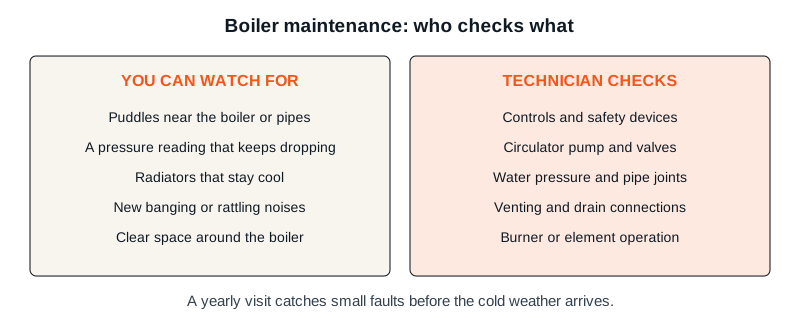
Maintenance keeps a hot-water system reliable. A yearly boiler maintenance visit lets a technician test the controls and safety devices, inspect the circulator and valves, check the water pressure and look for leaks along the plumbing. A maintenance visit also gives the technician a chance to check the drain valve, the expansion tank and the pipe insulation before winter, and these small plumbing checks prevent many leaks.
Heat pump repair
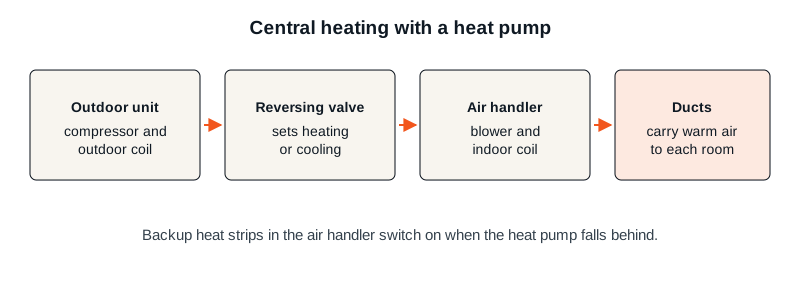
Heat pumps move warmth instead of making it, so they fail differently from furnaces: a reversing valve that sticks, a defrost board that never ends a cycle, a weak capacitor or backup strips that do not switch on.
Heat pump repair also covers the outdoor unit, which can ice over in cold, damp weather.
These units often work with backup strips or a gas furnace in very cold weather. When the backup does not switch on, rooms stay cool even though the outdoor unit is running, so tell the dispatcher what the outdoor unit and the vents are doing.
What the technician checks on the visit
Technicians who repair HVAC equipment follow the same order every time, so you get a clear finding before anything is replaced:
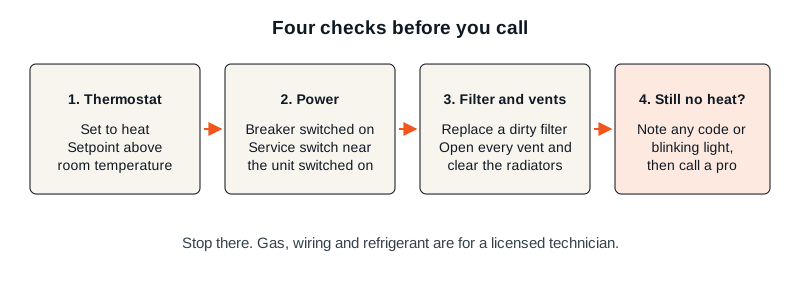
- Check the thermostat settings, the power to the unit and the filter, because a surprising number of calls end right there.
- Test the equipment in the order it runs. On a furnace that means the inducer, the igniter, the flame sensor and the limit switch.
- On a hot-water system, check the water pressure, the circulator pump and the zone valves.
- On a heat pump, check the outdoor unit, the reversing valve and the backup strips.
- Explain the fault in plain words and give you an estimate before any part is replaced.
After the repair, the technician tests the system through a full cycle and explains what was done, so you know the repair is complete before the visit ends. Nothing starts until you agree to the price. A professional technician can diagnose the cause on site and tell you what the repair involves.
Repair and replacement
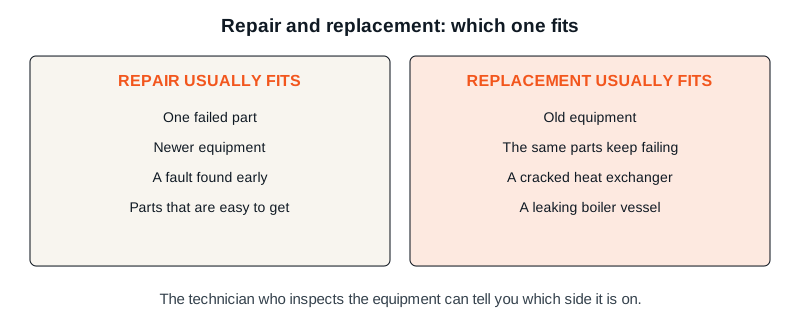
Most heating issues come down to a single part, and repairs are the answer. Replacement starts to make sense when the equipment is old, when the same parts keep failing, or when the heat exchanger or the boiler vessel itself has cracked or leaked, since those are the costly pieces.
- Repair usually fits a single failed part on newer equipment
- Replacement usually fits old equipment or repeated failures
- A cracked exchanger or a leaking boiler vessel points to replacement
Cost follows the failed part, and the pro sets the price, not Direct HVAC Pros. A flame sensor cleaning or an igniter sits at the small end, a blower motor, circulator pump or control board costs more, and a cracked exchanger or leaking vessel usually means replacement instead of repair.
A repair estimate should name the failed part, the labor and any related repair that is likely to follow. Ask the technician whether the repair carries a warranty and whether the repair price changes if a second fault turns up during the visit.
The independent heating contractors in our network will tell you honestly which side of that line your equipment is on, and you do not have to decide anything on the phone.
Installation of a new system
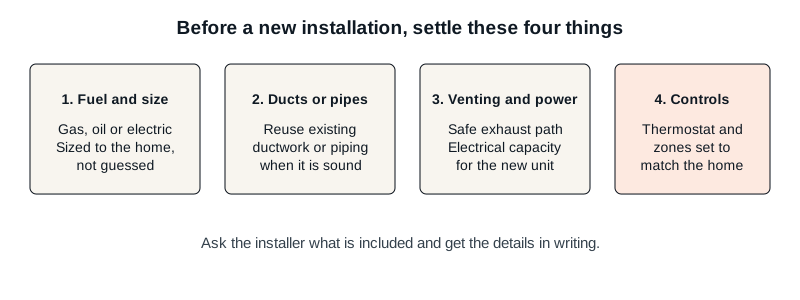
The HVAC pros we connect you with also handle installation, so a system that is past economical repair does not mean starting a new search. A new installation starts with the fuel, the size of the home and whether warmth will travel through ducts or pipes.
Sizing matters. A system that is too small struggles on the coldest days, and one that is too big cycles on and off and wastes energy. A proper installation measures the home, checks the existing ductwork or piping and sets the thermostat and zones to match.
Boiler installation also involves plumbing: supply and return pipes, the circulator pump, the expansion tank and a safe drain for the relief valve.
Furnace installation and boiler installation follow different paths. A furnace installation also covers the ducts, the filter and the vent, while a boiler installation covers the piping, the circulator pump, the zone valves and the drain for the relief valve.
Installation quotes should list the equipment, the labor and any plumbing or ductwork changes, so you can compare each installation proposal line by line. Whether you need a replacement or a first-time installation, the steps are similar: size, select, install and test.
- Which fuel is available at the home: gas, oil or electric
- Whether existing ducts or plumbing can be reused
- Venting and power needs for the new unit
- Thermostat and zone controls
Ask each installer what is included, get the details in writing and ask about warranty terms, which vary by company and by job.
Replacement and installation questions can be handled on the same call. Pass along the brand, the age and the problem so the HVAC pro arrives prepared, and ask about options such as zoned controls and a programmable thermostat.
Leaks and drain problems
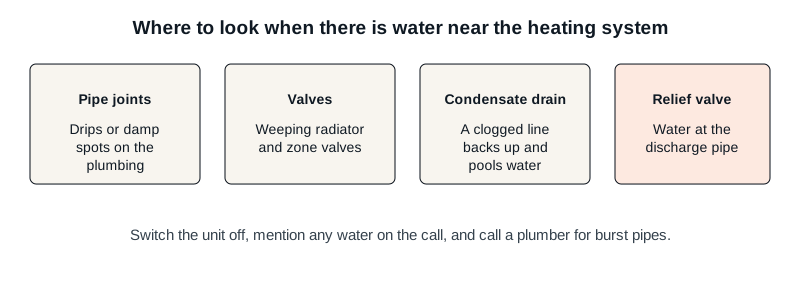
Water near a heating system is never normal. On a boiler, water may come from a leaking joint in the plumbing, a weeping valve or a relief valve that has opened. On a furnace, water usually comes from the condensate drain of a high-efficiency unit.
Small leaks near radiators, pipes or the drain often show up first as a damp patch on the floor. Catching a slow leak early can save the plumbing, the floor and the repair bill, so mention any damp spots on the call. A pipe that drips onto the control board is a reason to switch the unit off right away.
A clogged drain line backs up, and a safety switch can shut the heating system down. Turn the unit off, mention the water on the call and do not pour chemicals into the drain.
- Plumbing joints and valves near the boiler
- Radiator valves and the floor tubing connections
- The floor drain and the condensate line
- The drain valve at the bottom of the boiler
- The discharge pipe from the relief valve
Frozen pipes are a plumbing problem, and a burst pipe is a plumbing emergency. Shut off the water at the main valve and call a licensed plumber for the pipe, then call us for the heating.
An HVAC pro handles the heater and a plumber handles the plumbing. Many homes need both after a hard freeze, so describe any water damage or drain trouble on the call.
How to prevent a breakdown
Regular maintenance catches small problems before they stop your system in winter. Before the heating season starts, walk through the home and check the filters, the vents and the radiators. A maintenance visit before the cold arrives lets a technician check the filter, the burner or the heat pump coil, the thermostat and the safety controls.
Maintenance also covers the parts of the home that are easy to forget, such as the drain line, the pump, the valves and the plumbing around them.
- Keep the filters clean
- Keep vents and radiators clear of furniture
- Keep the area around the outdoor unit clear of snow, leaves and debris
- Watch for new noises, smells or leaks
A tune-up before winter can head off a heater repair in the coldest week. Annual maintenance is also a good time to review the thermostat schedule and ask whether the equipment is still the right size for the home.
Repair and maintenance often go together. When an HVAC technician is already there for a repair, it is a good time to ask what else is wearing out.
How the call works
A dispatcher answers at any hour, including nights, weekends and holidays, which makes this a fast way to reach an HVAC technician. The dispatcher asks what the system is doing and what kind of equipment you have, then matches you with a verified local pro, who takes your service request.
Every HVAC pro in our network works independently, and each HVAC technician sets the price for the job. HVAC repair and HVAC maintenance both start with the same call.
The technician arrives for the service call, finds the fault and tells you what the repair involves before any work starts. Whether you call it heater repair or boiler repair, the call works the same way. In winter, a house that is dropping toward freezing is a heating emergency, so call right away.
It speeds things up if you have a few details ready:
- The fuel, if you know it: gas, oil, propane or electric
- Roughly how old the equipment is
- What the thermostat is set to, and whether it is showing a message
- Any blinking light on the equipment, and how many blinks
- What changed right before it stopped, such as a power flicker or a new noise
Many repairs finish on the first visit when the failed part is a common one. When a part has to be ordered, the pro says so and schedules the return.
If the system has quit completely, call (833) 749-5188 now and the rest can be sorted out on the phone.
Common questions
How much will it cost?
It depends on the part and the system, and the pro you are matched with sets the price after diagnosing the problem. Ask for the quote before work begins.
Can it wait until morning?
A system that is still putting out some warmth can often wait for a daytime visit, but a house that is dropping toward freezing, or a boiler leaking water, is worth a call right away.
Does this cover boilers as well as furnaces?
The matched pro depends on your equipment. Tell the dispatcher whether you have a furnace, a boiler or a heat pump and you will be connected with someone who works on that type, including boiler repair and heat pump repair.
Need fast help? Call a dispatcher.
Tell the dispatcher what the system is doing and a verified local pro takes it from there.